
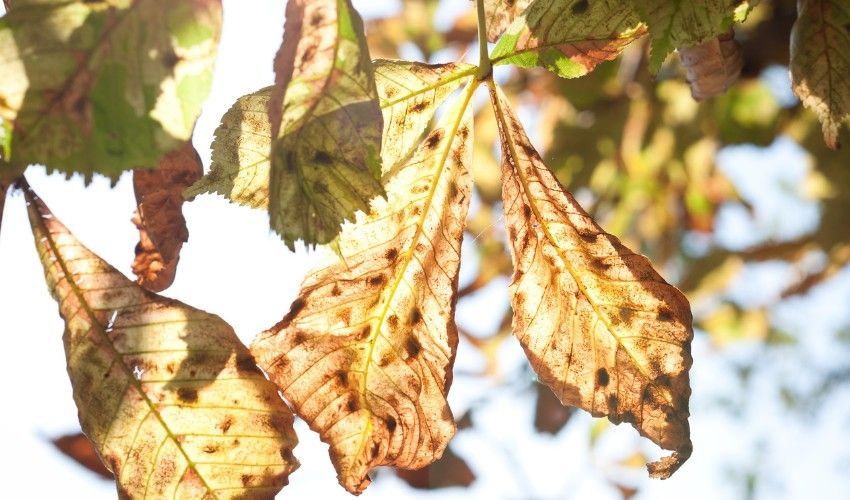
Summer is when most Hudson Valley homeowners start spending more time in their yards—and when they start noticing something’s off about their trees. A branch that looks droopy, leaves with strange spots, or bugs clustering on the bark can have you asking yourself “what’s wrong with my tree?”
Across Saugerties, Hurley, Kingston, and surrounding Ulster County communities, summer heat, pests, and disease can all change how your trees look. Some changes are a normal response to seasonal conditions, while others can signal a problem that needs attention. Knowing the difference can help you decide whether to keep an eye on your tree or call an arborist.
Key Takeaways
- Most summer leaf spots and visible damage are caused by fungal disease, environmental stress, or pest activity—not all are serious threats to your tree’s survival.
- Learning to observe your tree’s symptoms helps you communicate with an arborist and understand what’s happening.
- Crown dieback patterns and canopy loss that persist year after year signal systemic decline requiring professional assessment.
- Spotted lanternfly and other summer pests may be visible right now; identifying them correctly determines your next steps.
- A professional tree inspection reveals what homeowner observation cannot—root health, vascular problems, and decline causes.
Common Tree Problems That Become Obvious in Summer
With trees fully leafed out, changes in color, canopy density, and overall appearance can be easier to spot. Some of the most noticeable signs that a tree may be struggling include:
- Yellow or spotted leaves that don’t look normal
- Wilting or drooping branches despite adequate water
- Visible insects or honeydew (sticky residue) on bark and foliage
- Thinner canopy than last year with noticeably more sky showing through
Summer brings both opportunity and awareness. Your trees are at their fullest, which makes problems stand out. If something catches your eye, trust that instinct.
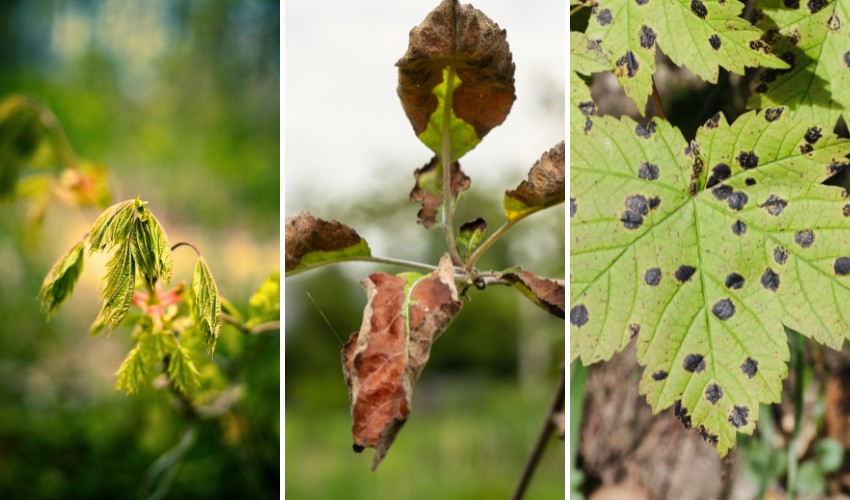
Different leaf symptoms point to different causes. Wilting may indicate water stress, brown scorched edges often result from environmental conditions, and black leaf spots are commonly caused by fungal disease. Proper identification is the first step toward the right solution.
Why Are My Leaves Yellowing or Spotted?
Yellowing or spotted leaves in summer are usually caused by fungal disease, bacterial infection, or environmental stress—but most are not serious threats to your tree. When you see this damage, the first question is usually “Is this tree dying?” In most cases, no, but let’s clarify what you’re actually looking at.
Fungal Leaf Spots
- Circular lesions with dark margins
- Often with visible spore centers
- Appear on lower branches where humidity lingers
- Spread via rain and wind
- Usually cosmetic. Most fungal spots do not threaten tree survival and affect appearance only.
Maple tar spot is an example of fungal leaf spot. It produces those alarming black spots on maple leaves, but they’re purely cosmetic and do no real damage to the tree.
Bacterial Leaf Spots
- Irregular, water-soaked lesions with yellow halos
- Often tied to tree wounds or overhead watering
- Generally not a serious threat to healthy trees.
Environmental Damage (sun scorch, drought stress, fertilizer burn)
- Presents symmetrically with brown leaf edges
- Not scattered spots throughout the canopy
- Scattered dark spots means fungal; brown crispy edges all over means environmental
- Temporary and resolves when conditions improve (water returns, sun exposure changes, fertilizer is flushed). Not progressive year-over-year like disease.
When Leaf Spots Matter
Most leaf spot diseases do not seriously threaten tree health—they affect appearance, not survival. A tree with scattered spots but a full, healthy canopy is not in decline.
However, leaf spots become a concern when they appear alongside other symptoms, like crown thinning, branch dieback, or persistent wilting. Then they become part of a larger decline pattern worth investigating professionally.
What Do Wilting Branches and Canopy Thinning Mean?
Wilting branches and canopy thinning can range from temporary seasonal stress to signs of whole-tree decline. The key is determining whether the symptoms improve over time or continue to worsen.
Wilting Branches
Wilting branches, where leaves droop or yellow despite adequate watering, don’t always mean a tree is dying. A single season of branch tip wilting can come from drought stress that resolves with water. Insects, like sawflies, can cause heavy defoliation in summer, but trees regrow leaves next spring. One year of insect damage rarely kills a healthy tree.
One bad summer is recoverable. The best way to tell whether your tree is recovering is to watch how the canopy changes from one growing season to the next.
Canopy Loss Year-Over-Year
Comparing your tree’s canopy to last year reveals whether thinning is normal or a problem worth addressing. Ask yourself these questions:
- Do I see noticeably more sky showing through the branches than 12 months ago?
- Has this thinning been happening for one year or multiple years?
- Does the tree still have 70% or more of its foliage?
One season of thinning with most of the canopy intact is likely recoverable. But progressive thinning over two or three years suggests the tree is losing energy reserves and may struggle next season.
Crown Dieback Signals Whole-Tree Decline
While canopy thinning measures the overall health of the tree, crown dieback points to specific branches that are no longer being supported. Crown dieback—foliage dying back from branch tips toward the trunk—signals the tree is losing the ability to move water and nutrients to its branches. Some issues that crown dieback can indicate are:
- Root stress (compacted soil, poor drainage)
- Vascular disease (the tree’s plumbing is blocked)
- Pest pressure (heavy insect populations)
- Chronic nutrient deficiency
Not all crown dieback is immediately fatal, but it signals the tree needs professional assessment.
Not every symptom signals a tree in decline, but patterns matter. Changes that worsen over time, spread through the canopy, or return year after year are strong indicators that it’s time for a professional assessment.
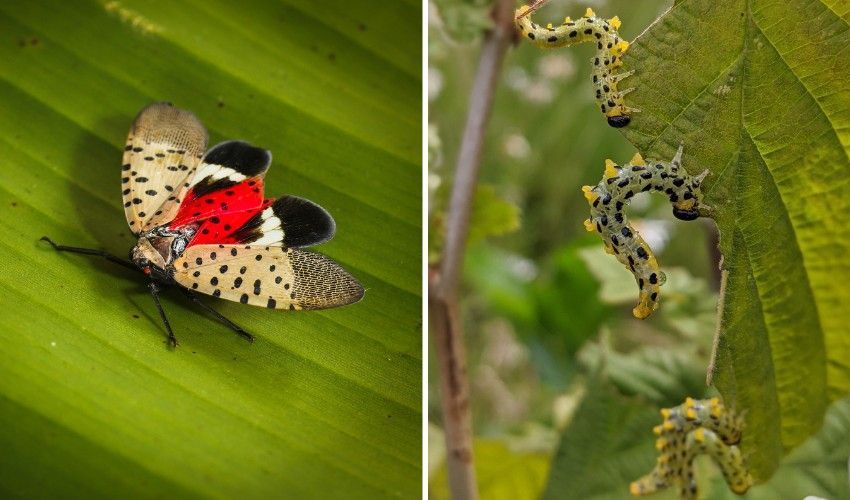
Not all tree pests cause the same damage. Spotted lanternflies are sap-feeding insects that leave behind sticky honeydew, while sawfly larvae chew leaves and can cause temporary defoliation. Correct identification helps determine the right response.
What Pests Are Visible on Trees in Summer?
The most common summer tree pests in the Hudson Valley include spotted lanternflies, sawflies, webbing caterpillars, aphids, and scale insects. While they leave different clues, most produce a few recognizable signs that help you identify what’s happening.
Spotted Lanternfly
Spotted lanternfly is the pest you’re most likely noticing in July and August in the Hudson Valley.
How to Identify SLF
- Red nymphs with white spots (July to early August)
- Brown adults with bright red hindwings (late July through fall)
What SLF Feeding Damage Looks Like
- Clustering on bark and branches
- Feeding damage on leaves
- Sticky residue (honeydew) on foliage and surfaces below
A few spotted lanternflies on a large, healthy tree rarely cause permanent damage. However, thousands of SLF, or heavy feeding on smaller or already-stressed trees, can weaken the tree enough to warrant monitoring or treatment.
If you’re unsure what you’re seeing, explore our complete spotted lanternfly FAQ for detailed guidance on identification, the insect’s lifecycle, and the best treatment timing.
Sawfly and Webbing
Sawfly larvae produce silken webbing on branches and skeletonized leaves, making them easy to spot in mid-summer.
How to Identify Sawfly
- Silken webbing on branches
- Skeletonized leaves (tissue eaten but veins remain)
- Small caterpillar-like larvae feeding voraciously
Is Sawfly Damage Permanent?
No. Sawfly larvae complete their life cycle and disappear by late summer. Healthy trees tolerate one season of defoliation and regrow leaves next spring. It may happen again next year if conditions favor sawfly populations, but it’s usually not a permanent threat.
Sap-Feeding vs. Leaf-Feeding Insects
While these pests damage trees differently, understanding how they feed helps you judge whether the damage is serious or temporary.
- Sap-Feeding Insects (Spotted Lanternfly, Aphids, and Scale): Extract sap from the tree, leaving behind sticky honeydew and sooty mold. Heavy infestations can weaken trees over time, especially if they’re already stressed.
- Leaf-Feeding Insects (Sawflies, Caterpillars, and Many Beetles): Chew leaves or skeletonize foliage. While the damage can look dramatic, healthy trees typically recover after the insects complete their life cycle.
Seeing a few insects isn’t automatically a reason to treat your tree. Most healthy trees tolerate minor pest activity, but recurring infestations or damage on an already stressed tree warrant a professional inspection.
Frequently Asked Questions About Summer Tree Health
What’s the difference between a fungal leaf spot and a sign my tree is dying?
Fungal leaf spots are cosmetic—they affect leaf appearance but not survival. A dying tree shows crown dieback (foliage dying back from branch tips toward the trunk), progressive canopy loss year-over-year, or persistent wilting despite adequate water. A tree with scattered leaf spots but a full, healthy canopy is not dying.
Do honeydew and sooty mold on my tree mean it has spotted lanternfly?
Not necessarily. Honeydew and sooty mold can come from aphids, scale insects, or other sap-feeding pests. You’d need to see the spotted lanternfly itself to confirm. Check tree bark, branch junctions, and the lower trunk where SLF clusters.
Should I be worried that my tree has wilting branches on one side only?
One-sided wilting can signal vascular disease (the tree can’t move water to that side) or root damage. Monitor it closely. If wilting spreads to other branches or persists over multiple seasons, professional assessment becomes important to diagnose the cause.
Why are my beech tree’s leaves turning brown and curling again this year?
If your beech trees show brown, curled, and distorted foliage recurring year-over-year, you may have beech leaf disease (BLD). Unlike temporary fungal spots, BLD causes progressive decline in beech trees. Our beech leaf disease guide explains identification, progression, and when professional assessment is critical to save your tree.
Can a tree recover from heavy defoliation in summer?
Yes, if the tree is healthy and defoliation is from insects (sawfly, caterpillars) that complete their life cycle. The tree will regrow leaves next spring. However, if canopy loss is from disease or repeated stress, recovery depends on the underlying cause. Multiple consecutive years of heavy defoliation can exhaust reserves.
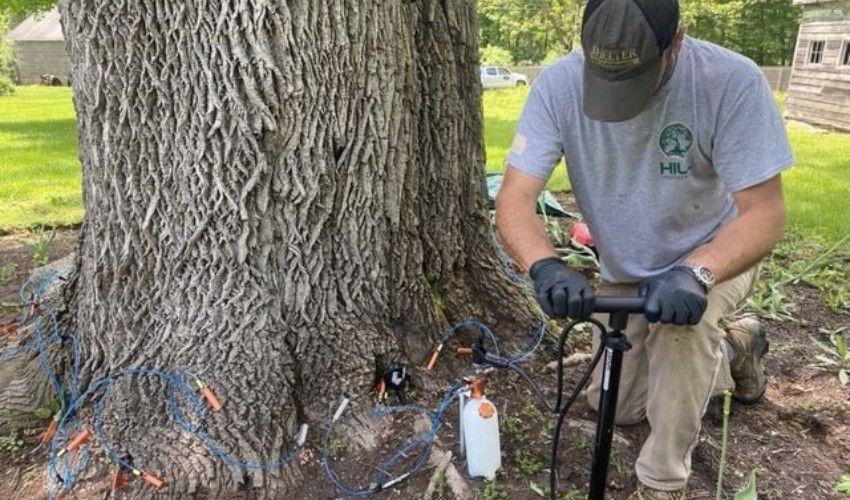
Systemic trunk injections deliver insecticide directly into a tree’s vascular system to protect high-value trees from pests such as spotted lanternflies. These professional treatments require specialized equipment and a licensed applicator.
Get Expert Answers About Your Trees from Hill Treekeepers
Most of what homeowners spot in summer is manageable and doesn’t always require intervention. But when symptoms persist, recur year after year, or follow a crown dieback pattern, professional assessment becomes necessary.
If you’ve noticed yellowing leaves, canopy thinning, unusual pests, or other signs of tree stress in Saugerties, Hurley, Kingston, Woodstock, or throughout the Hudson Valley, Hill Treekeepers’ Certified Arborists can identify the cause and recommend the right course of action. Call us at 914-306-9069 or request a quote online to schedule a professional tree inspection.
Share this online!

Get the highest quality of tree services for residential and commercial properties in the Hudson Valley area. We look forward to working with you!
TOPICS
Recent Articles



Don't Miss the Next Update!
Join the thousands of smart Hudson Valley residents who get the monthly newsletter from Hill Treekeepers. It's full of helpful information you won't want to miss!

