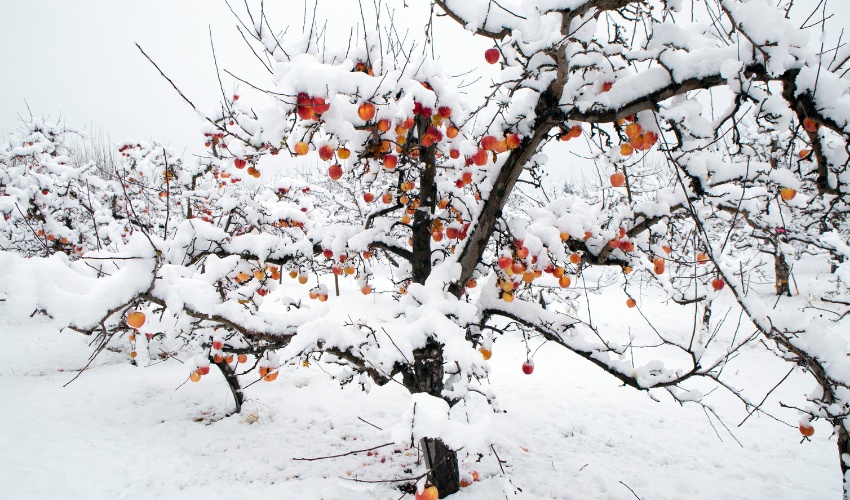
The Hudson Valley has been home to thriving apple orchards since the 1820s and now produces 89% of the region’s fruit. But successful orchards don’t happen by accident. Variety selection, pollination, and seasonal care all play a role in long-term tree health and fruit production.
Whether you’re planting a few backyard trees or managing a small home orchard, growing apples in Orange, Ulster, and Dutchess counties requires region-specific decisions that directly affect tree longevity and harvest quality.
Key Takeaways
- Choose proven Hudson Valley apple varieties, like Honeycrisp, Gala, and heritage McIntosh for reliable harvests.
- Plan pollination partnerships by planting two compatible varieties within 50 feet.
- Time planting for early spring or fall to ensure strong establishment before temperature extremes.
- Select sites with full sun and proper drainage to prevent common apple tree diseases.
- Monitor for regional apple pests, such as apple maggot fly and spotted lanternfly.
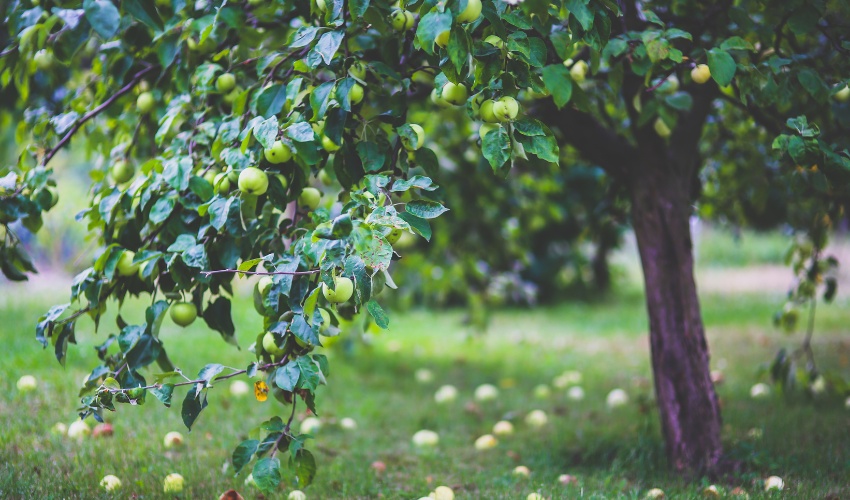
Young apples developing on a healthy tree branch show the results of proper pollination and early-season care in a Hudson Valley orchard.
Which Apple Varieties Grow Best in the Hudson Valley?
Not all apple species are right for your Hudson Valley property. Choosing the right variety will give you the best chance of having a perfect fruit harvest.
The Hudson Valley’s Zone 6a climate provides the perfect balance apple trees need. Our cold winters give trees the necessary dormant period, while our warm summers allow fruit to ripen fully. With apples representing the lion’s share of Hudson Valley fruit crops, you’re following in the footsteps of countless successful growers. The region’s naturally loamy soils provide excellent drainage while retaining enough moisture for steady growth.
Top Modern Apple Varieties
- Honeycrisp: This variety offers exceptional disease resistance, particularly against apple scab, which can be problematic in our humid climate. Honeycrisp stores excellently and produces consistently, making it the most reliable choice for Hudson Valley orchards.
- Gala: Ripens early in the season, typically by late August, making it an excellent choice for Hudson Valley’s sometimes unpredictable fall weather. It serves as a dependable pollinator for other varieties and consistently produces high-quality fruit with proper care.
- Fuji: Provides late-season harvests that can extend fresh apple availability well into October. This variety stores exceptionally well and develops its characteristic sweetness best in our regional climate patterns.
- Liberty: Deserves special mention for home growers interested in reduced-spray growing. Cornell University developed this variety specifically for disease resistance.
Proven Traditional Options
- McIntosh: Carries a deep Hudson Valley heritage and remains one of our most reliable performers. This variety excels in cooking applications and develops its best flavor profile in our regional climate. McIntosh trees adapt well to our soil conditions and show excellent cold hardiness.
- Empire: Combines reliability with good storage qualities. This variety consistently produces well-shaped fruit and handles our region’s weather variations better than many newer varieties.
- Northern Spy: Offers excellent late-season harvests and serves as an outstanding pollinator for other varieties. This variety stores particularly well and develops complex flavors when grown in Hudson Valley conditions.
Heritage Varieties for History Buffs
- Baldwin: Represents true Hudson Valley apple history and still performs well for those interested in historic fruit varieties. Exceptional storage capabilities with unique flavor characteristics in our climate.
- Esopus Spitzenburg: Thomas Jefferson’s favorite apple with unusual flavor profiles and historical significance. Requires slightly more care but produces distinctive fruit showcasing regional heritage.
Did You Know? Many of the apple varieties grown in the Hudson Valley today trace back to historic cultivars that shaped the region’s agricultural identity.
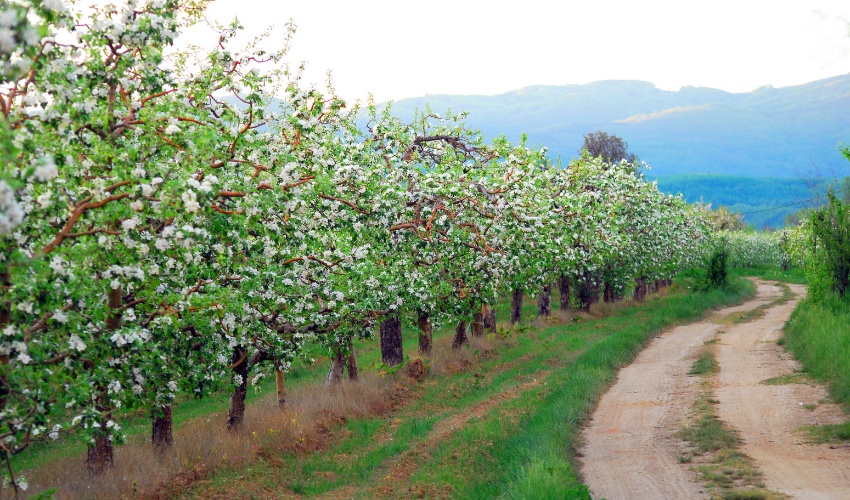
Apple trees in peak spring bloom demonstrate the spectacular flowering period that makes proper pollination planning critical for Hudson Valley orchards.
How Do You Get the Best Possible Apple Harvest?
Successfully growing apples in the Hudson Valley requires more than just planting trees. You need to understand pollination partnerships. Most apple varieties can’t pollinate themselves, making proper variety pairing essential for good fruit production.
Choose the Right Pollination Partners
Most apple varieties require cross-pollination to produce good fruit crops. Even self-fertile varieties, like Golden Delicious, benefit significantly from having pollination partners nearby. The key lies in understanding bloom timing and ensuring compatible varieties flower simultaneously.
In the Hudson Valley, bloom timing can vary by 7-10 days depending on spring weather patterns. Early warm spells followed by late frosts can disrupt timing, making it essential to plant varieties with overlapping bloom periods.
- Early Bloomers: These include Gala, McIntosh, and Red Delicious. These varieties typically flower in late April to early May, depending on spring temperatures.
- Mid-Season Bloomers: Varieties like Honeycrisp, Empire, and Liberty usually flower 3-5 days after early varieties. This group provides the broadest pollination compatibility with both early and late bloomers.
- Late Bloomers: Trees such as Fuji, Northern Spy, and Baldwin flower last, typically in mid-May. These varieties extend the overall bloom period and ensure pollination backup during unpredictable spring weather.
For successful pollination partnerships, plant varieties from the same bloom group or adjacent groups. For example, pairing Gala (early) with Honeycrisp (mid-season) provides excellent cross-pollination opportunities.
Support Bees and Improve Pollination Reliability
Plant pollination partners within 50 feet of each other; the closer is better. In the Hudson Valley’s sometimes windy spring weather, closer spacing ensures better pollen transfer. Consider that crabapples enhance overall orchard pollination, and many ornamental varieties provide excellent pollen sources.
Protect bee populations by avoiding pesticide applications during bloom periods. The Hudson Valley’s native bee populations provide significant pollination services when properly supported. Create a bee-friendly habitat by maintaining diverse flowering plants throughout your property.
Where Should You Plant Apple Trees in the Hudson Valley?
Choosing the right location and planting your apple trees properly sets the foundation for decades of successful harvests. The Hudson Valley’s natural advantages can work for or against you, depending on how well you select and prepare your planting site. These fundamentals will help ensure your trees establish strong root systems and thrive in our regional climate.
Prioritize Sun Exposure, Airflow, and Frost Protection
Apple trees need full sun and good air movement to stay productive and disease-resistant. In the Hudson Valley, south-facing or gently elevated sites provide the best conditions by maximizing sunlight, improving drainage, and allowing cold air to move away from trees. Avoid low-lying areas where frost settles and humid air lingers, as these conditions increase disease pressure and the risk of spring frost damage.
Use Hudson Valley Soil Conditions to Your Advantage
Our region’s naturally loamy soils provide excellent growing conditions for apple trees. These soils drain well while retaining enough moisture for consistent growth. Most Hudson Valley soils fall within the ideal pH range of 6.0-7.0 that apple trees prefer.
Test drainage by digging a 4-foot hole and checking if it fills with water during wet weather. If water accumulates, consider raised planting areas or choose a different location. Proper drainage becomes essential during our wet spring seasons.
Get Planting Details Right to Avoid Long-Term Problems
Planting mistakes often don’t show up right away, but they can limit growth, reduce fruit production, or shorten a tree’s lifespan years down the road. Getting these foundational details right from day one helps apple trees establish strong roots and avoid problems that are difficult to correct later:
- Plant at the Right Time: Early spring planting, typically mid-April after the last hard frost, allows trees to establish before summer heat. Fall planting works well if completed by early October, giving roots time to establish before winter.
- Ensure Proper Spacing: Semi-dwarf trees need 15-20 feet between trees, while dwarf varieties require 8-10 feet. Consider mature size when planning to prevent overcrowding.
- Plant at the Right Depth: Plant at the same depth as the container, ensuring the trunk flare remains visible. Planting too deep leads to root problems that may not appear for several years.
- Keep Up with Yearly Maintenance: This includes watering every 2-3 days during dry spells and maintaining 3-4 inches of mulch around the base. Keep mulch 6 inches away from the trunk to prevent pest problems.
WARNING: Remember to call 811 before digging to mark underground utilities. Professional tree planting services provide guaranteed establishment and proper technique for valuable fruit trees.
What Kind of Year-Round Care Do Apple Trees Need?
Apple trees require different care throughout each season to maintain their health, prevent problems, and maximize fruit production. Understanding what to do when (and recognizing when to call professionals) keeps your Hudson Valley apple trees productive for generations. Here’s your seasonal care calendar for success.
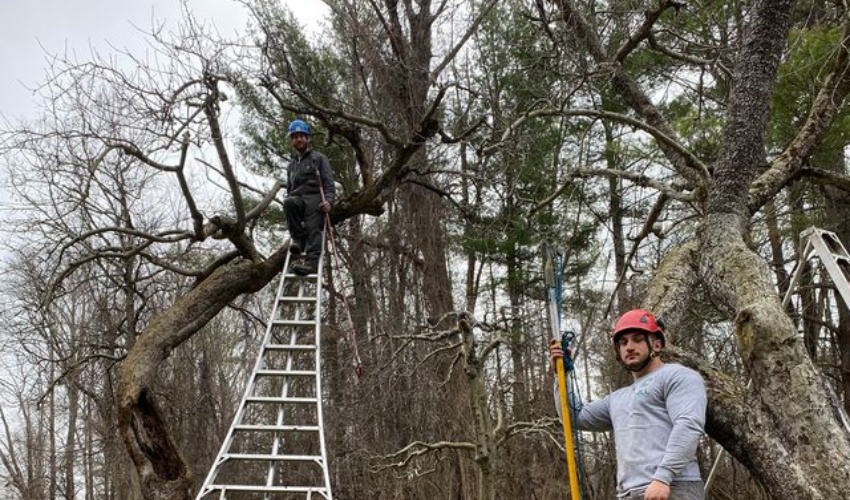
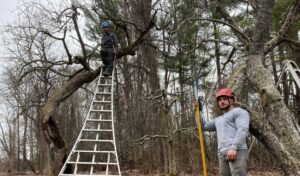
Hill Treekeepers arborists demonstrate proper winter pruning techniques using professional equipment and safety protocols to maintain healthy tree structure.
Schedule Winter Pruning and Dormant Season Care (December-March)
Winter dormancy is the most important care window for apple trees. With leaves off and growth paused, structural issues, deadwood, and disease damage are easier to see and address without stressing the tree.
This is the ideal time for major pruning, starting with the removal of dead, diseased, and damaged branches, followed by shaping the canopy to improve light penetration and airflow. Watch closely for fire blight cankers during pruning, as infected wood must be removed well below visible symptoms and disposed of properly to prevent reinfection.
Dormant oil applications during mild winter days help control overwintering scale insects and aphid eggs before populations explode in spring. Winter is also the planning season – soil testing, nutrient adjustments, and long-term orchard improvements are best evaluated now, especially if trees showed reduced vigor the previous year.
PRO TIP: Penn State Extension offers excellent guidance on fruit tree pruning fundamentals and apple-specific pruning techniques for home orchards.
Protect Blooms and Prevent Disease in Early Spring (April-May)
Focus spring care on protecting blossoms and limiting early disease pressure. As buds break and flowers emerge, apple trees become vulnerable to late frosts, fungal diseases, and early insect activity.
Apply fertilizer only after soils warm to support healthy growth without encouraging excessive vegetative development. Refresh mulch to conserve moisture and regulate soil temperature, keeping material away from the trunk.
Wet spring conditions favor apple scab, making early monitoring critical. Begin pest scouting and install pheromone traps for apple maggot flies and other regional pests to catch problems before populations build.
Support Fruit Development During Summer Stress (June-August)
Reduce stress during fruit development by managing crop load, water availability, and insect pressure. Thin fruit clusters six to eight weeks after bloom to prevent limb failure and improve fruit size and consistency.
Maintain deep, consistent watering during dry periods, as uneven moisture can reduce yield and fruit quality. Monitor insect populations closely, as summer brings peak activity. Use integrated pest management strategies to control pests while protecting beneficial insects.
Complete Harvest, Cleanup, and Tree Assessment in Fall (September-November)
Harvest timing varies by variety, with early apples ripening in late summer and later varieties maturing into October. Picking at the right time improves storage quality and helps reduce pest pressure.
After harvest, focus on cleanup. Remove fallen fruit, diseased leaves, and debris to break pest and disease cycles before winter. Install rodent guards before snowfall to protect trunks from winter damage.
Fall storms can reveal hidden structural issues. Check trees for broken limbs, cracks, or weakness and address problems before winter limits access or visibility.
Frequently Asked Questions Growing Apple Trees
How many apple trees do I need for pollination?
Plant at least two different varieties within 50 feet of each other. Varieties like gala and honeycrisp are excellent pollinators for each other and most other apple varieties. This ensures good fruit set even during challenging spring weather.
When should I call an arborist for my apple trees?
Contact a Certified Arborist for disease identification, structural pruning of young trees, large mature tree care, or when fruit production suddenly declines despite proper care. Professional expertise prevents costly mistakes and ensures long-term tree health.
How long before apple trees start producing fruit?
Dwarf apple trees typically produce fruit in 2-3 years, semi-dwarf in 3-4 years, and standard trees in 4-6 years. Proper care and variety selection significantly impact production timelines. Trees planted correctly with appropriate varieties often exceed expectations.
What are the biggest pest threats to Hudson Valley apple trees?
Apple scab disease and apple maggot fly are traditional concerns, while spotted lanternfly is an emerging threat requiring monitoring and potential professional treatment. Early identification and proper timing of treatments prove essential for effective control.
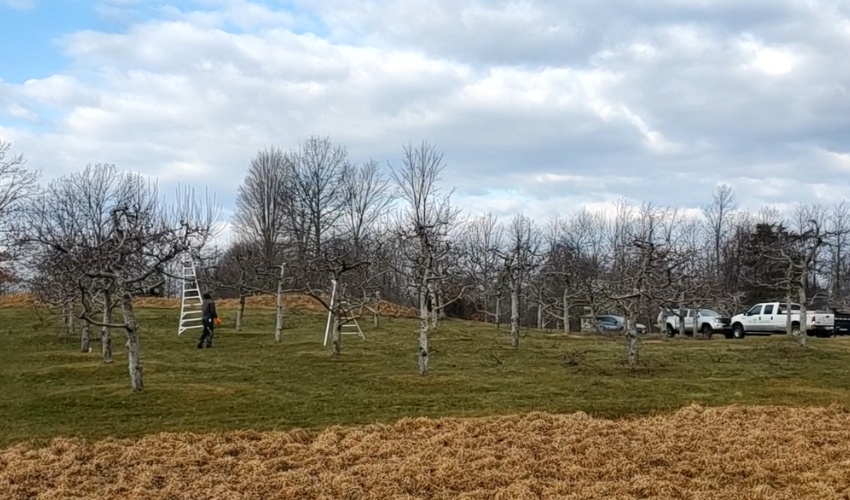
Professional orchard maintenance requires specialized equipment and expertise, especially for mature trees that need structural pruning for long-term health and productivity.
Grow Healthy Hudson Valley Apple Trees with Help from Hill Treekeepers
Growing successful apple trees in the Hudson Valley combines our region’s natural advantages with proper variety selection, pollination planning, and seasonal care. With the right approach, your apple trees will provide decades of harvests while enhancing your property value and connecting you to nearly two centuries of regional apple-growing tradition.
Ready to start your Hudson Valley apple orchard? Call Hill Treekeepers at 914-306-9069 or request a quote online.
Share this online!

Get the highest quality of tree services for residential and commercial properties in the Hudson Valley area. We look forward to working with you!
TOPICS
Recent Articles


Don't Miss the Next Update!
Join the thousands of smart Hudson Valley residents who get the monthly newsletter from Hill Treekeepers. It's full of helpful information you won't want to miss!

