
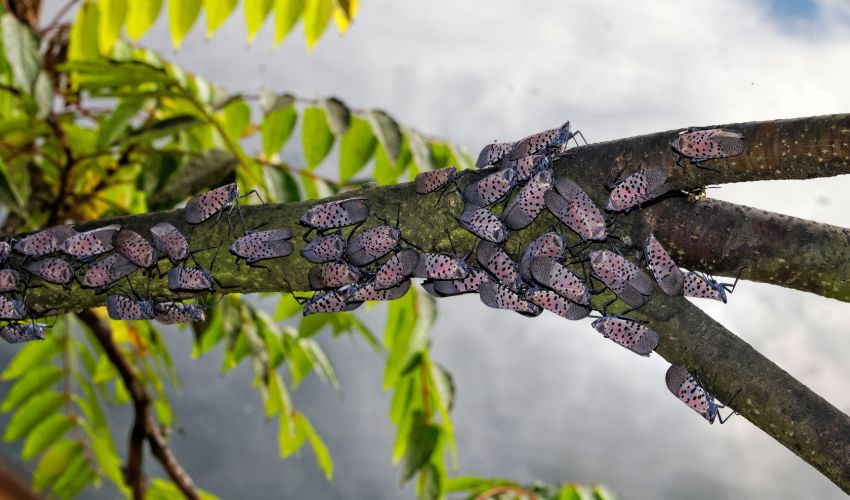
In July, spotted lanternflies are in peak mating season, and Hudson Valley homeowners are spotting them on their trees, vehicles, and decks. If you’re seeing swarms of insects with distinctive black-and-gray wings, you’re not alone — SLF populations are now firmly established across Orange and Ulster counties.
Whether this is your first brush with this invasive insect or you’ve been battling them for years, this article answers your most common questions about spotted lanternflies, including how to identify them, which of your trees are at risk, what damage they cause, and what you can actually do about it.
Key Takeaways
- Spotted lanternflies are active now across the Hudson Valley; identifying them at each life stage (nymphs in spring/summer, adults mid-July through December) helps you catch infestations early.
- Tree-of-heaven is their preferred host, but SLF also feed on black walnut saplings, red maple, and fruit trees — all common in Hudson Valley landscapes.
- Honeydew (sticky sap residue) and sooty mold are visible signs of SLF damage; weakened trees become vulnerable to secondary pests and disease.
- Homeowners can remove egg masses (fall–spring), but licensed arborists now have professional systemic treatments available to protect high-value trees.
Why am I hearing so much about spotted lanternflies? Are they really that big of a deal?
As the invasive insect spotted lanternfly (SLF) has spread across the U.S., so has news of its destructive nature and instructions to stomp on any in sight. You may have read about spotted lanternflies in the news, heard of apps to track how many were destroyed, or even seen comedy sketches about its ability to produce thousands of eggs.
Why is there so much being said about the spotted lanternfly? Because it can wreak havoc here. It has already impacted plant and tree health, is a nuisance (it’s never fun to walk into a swarm of flying insects), and can potentially ruin beer and wine production thanks to its love of hops and vines.
How can I recognize spotted lanternflies?
Spotted lanternflies have several life stages and look different during each of those stages.
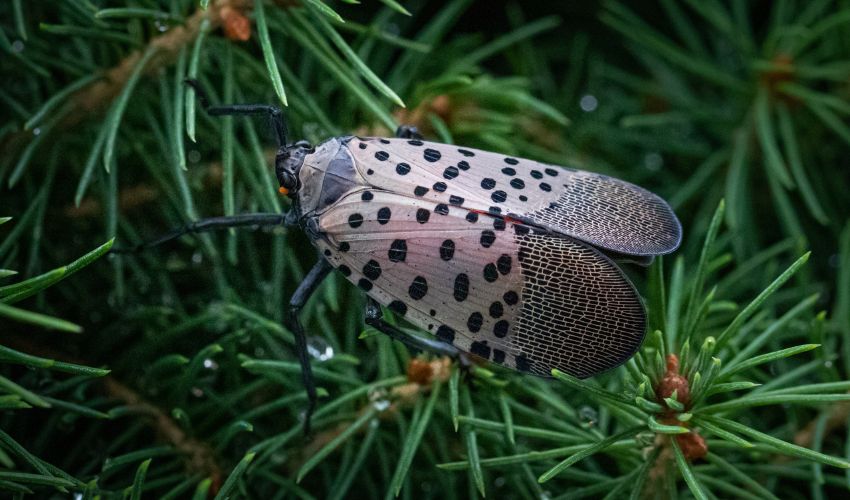
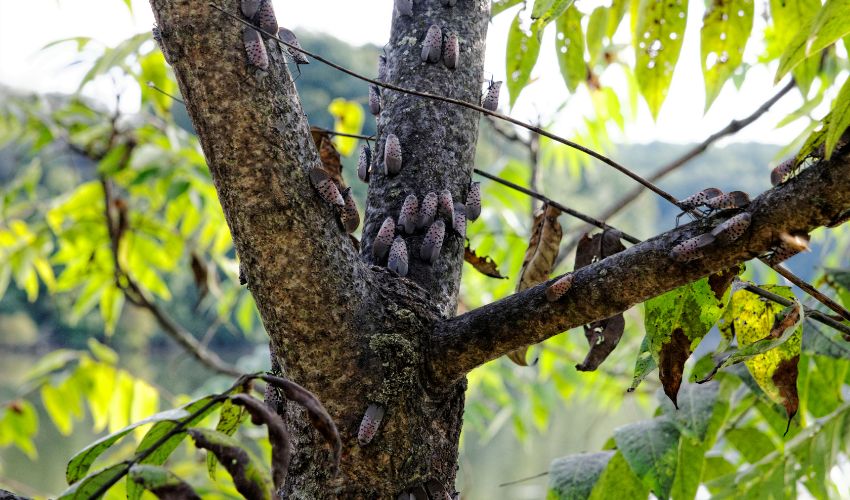
Most people can most easily recognize SLF adults. They look like moths and have distinctive markings on their body and wings and are most often seen from July through December.
Look for an insect that is around an inch long and has outer wings (the ones you’re most likely to see) with black dots and a pink hue. If the wings are outstretched, you’ll see forewings that are gray with black spots and then red with black spots. The upper portions are dark with a white stripe.
Adults will often swarm a tree or structure as a group, so you’re most likely to see many spotted lanternflies together.
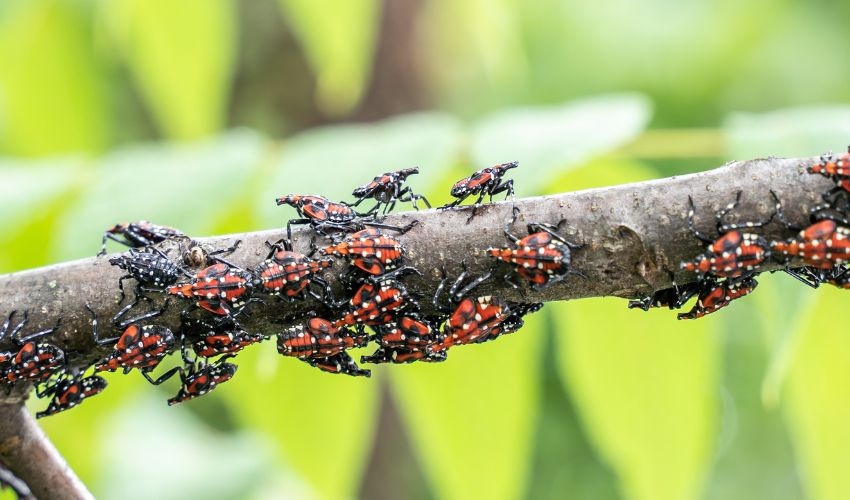
Nymphs are smaller (1/4 to ¾ inch) and black with white spots or red with black and white spots. You’re most likely to see these young insects from April through October. They don’t yet have wings, so they move by hopping or jumping, usually from a tree branch to the ground. They will feed on some plants and trees, so they can be damaging at this stage.
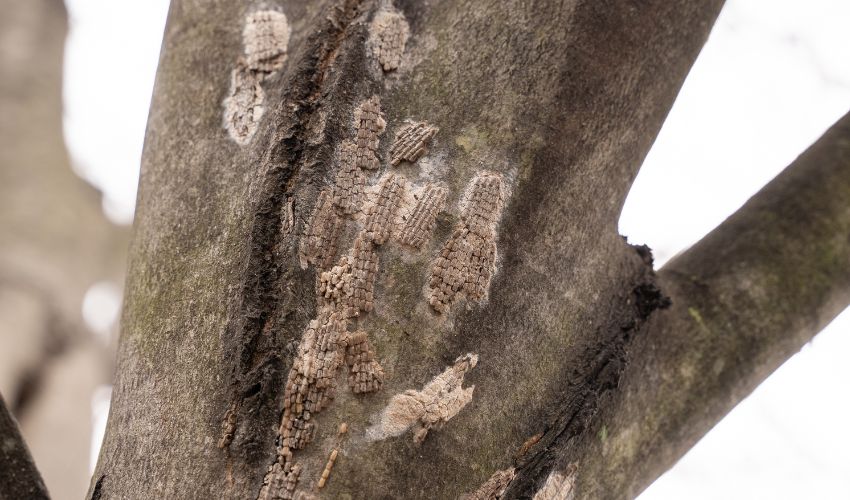
Egg masses are easily missed but are the primary way that spotted lanternflies move to new areas, so it’s important to know how to spot and recognize them. Check for shiny gray blobs on tree trunks, outdoor furniture, vehicles, containers, or any flat surface. The egg masses become less shiny over time and can often blend into surroundings.
>>Here’s a helpful video about spotting egg masses
Spotted lanternflies lay eggs from late summer to early fall, so the best time to check for egg masses is September through May.
Do spotted lanternflies harm humans?
No, they do not bite or sting, so there is no threat to you or your pets. They feed only on plants and trees.
Which of my trees or plants could SLF impact?
Tree-of-heaven (Ailanthus) is the favorite food item for spotted lanternflies, but they will also feed on:
- Black walnut
- Maple (especially red and silver maple)
- Willow
- River birch
- Black cherry
- Tulip poplar
- Sumac
- Other trees
This invasive insect also really loves grapevines. Vines can become weak or die due to spotted lanternflies feeding on them.
Spotted lanternflies have been recorded feeding on over 70 different plant species, including fruit trees, rose bushes, perennials, and some garden herbs.
Spotted lanternflies extract and feed on the sap of trees and plants and leave behind a sticky substance called honeydew, which can attract other pests. The honeydew can also grow sooty mold fungi.
If a tree is already weakened from the loss of sap and is then attacked by a tree pest, there can be detrimental results. Wasps and ants are drawn to honeydew as well, which can impact your time outdoors.
>>See some of the damage spotted lanternflies have already done to trees, plants, and properties
{cta_in_blog_content}
How is the spotted lanternfly different from other “bugs”?
Spotted lanternflies are invasive, meaning that they did not originate here, but in Asia. Because they traveled to the U.S. (it’s suspected that they hitched a ride on a shipment of stones), they can spread and reproduce without fear of natural predators.
With no predators to quell the population growth, this insect has already expanded from Pennsylvania (first spotted in 2014) to much of the east coast, including New York.
They are expected to continue spreading across the United States and North America as they have proved difficult to eradicate or even contain. If you’re concerned about an infestation or signs of tree damage, Hill Treekeepers can assess your trees and discuss your options.
Seeing Spotted Lanternflies on Your Trees?
What should I do to stop this invasive pest?
Because spotted lanternflies are not native to our area, the only predator of this pest is us – humans.
However, we’re also responsible for helping this insect spread to new areas, thanks to its hitchhiking ability (and propensity to lay eggs on any smooth surface).
Some things you can do to prevent the spotted lanternfly from spreading further include:
- Before you travel anywhere, check your vehicle and any cargo for spotted lanternfly egg masses. They can camouflage easily, so check carefully! Scrape off and destroy any egg masses that you find – you can put them in a plastic bag with rubbing alcohol or hand sanitizer and throw the bag in the trash. If the egg mass is too high for you to reach, don’t attempt to reach it! Contact a professional for anything over 10 feet.
>> Here’s a helpful checklist of places to check for hitchhiking spotted lanternflies - Learn how to recognize spotted lanternflies during all life stages, and report any seen outside the known range. Take a photo, note the location, collect the insect(s) (if possible), and report via:
- New York Spotted Lanternfly Sighting Report Form
- Emailing pictures and location to spottedlanternfly@agriculture.ny.gov
- Check if you have Tree-of-Heaven growing on your property. This tree is considered invasive and should be removed anyway. Contact Hill Treekeepers to assist with this or any tree removal.
- If you have any black walnut tree saplings growing on your property, take extra care to protect them. If a large enough infestation of spotted lanternflies feeds on your young tree, they could kill it.
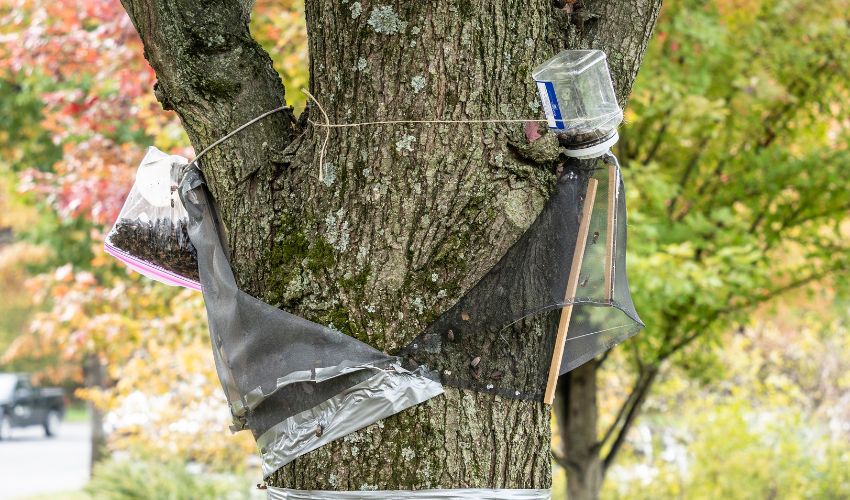
- Construct a homemade “circle trap” if spotted lanternflies are swarming your property.
- Follow any SLF quarantine restrictions for your area.
- PennState Extension has a variety of SLF resources to help the public in the spread of the spotted lanternfly.
- Stomping on any spotted lanternflies that you see may seem like a simple solution, but it is effective.
- Volunteer for New York State to find spotted lanternfly populations and tree-of-heaven plantings.
What professional treatment options are available for spotted lanternflies?
Licensed arborists now have effective professional treatment options for SLF management. If your trees are showing signs of SLF feeding damage (honeydew, sooty mold, or visible insects), or if you want to protect high-value ornamental and fruit trees, professional systemic insecticide treatments via trunk injection can help.
Professional systemic treatment options include:
- Imidacloprid (Extended Protection): Applied in spring or early summer; provides season-long protection. Best for preventive care on high-value trees.
- Dinotefuran (Faster Response): Applied mid-summer through September when SLF nymphs and adults are actively feeding; delivers results within 24–48 hours. Best for reactive treatment when SLF are visible.
These professional treatments require specialized equipment, proper dosing by tree diameter, and regulatory compliance. Hill Treekeepers holds a New York commercial pesticide business registration and employs ISA Certified Arborists trained to apply these treatments safely and effectively.
Why Professional Treatment Matters
DIY egg removal (fall–spring) is an accessible preventive step, but once SLF populations are active and feeding (spring through fall), professional systemic treatment is the most effective way to protect your trees and prevent decline.
Get Ahead of the Spotted Lanternflies Now
Peak spotted lanternfly activity is underway across the Hudson Valley, making this the ideal time to protect vulnerable trees. Whether you need help identifying an infestation, removing egg masses, or protecting high-value trees with systemic treatment, early action delivers the best results.
Hill Treekeepers provides professional-grade SLF treatments and ISA Certified Arborist expertise to assess, treat, and protect your trees. We’ll identify which are most at risk, recommend the right approach for your landscape, and help prevent long-term feeding damage. Don’t let spotted lanternflies weaken your trees. Call us at 914-306-9069 or schedule a free assessment.
Share this online!

Get the highest quality of tree services for residential and commercial properties in the Hudson Valley area. We look forward to working with you!
TOPICS
Recent Articles



Don't Miss the Next Update!
Join the thousands of smart Hudson Valley residents who get the monthly newsletter from Hill Treekeepers. It's full of helpful information you won't want to miss!

