

Pruning fruit trees can feel a little intimidating, but the timing really does make all the difference. In the Hudson Valley, winter weather doesn’t always follow the rules, so knowing when your trees are truly dormant helps you prune without stressing them out. Whether you’re tending a small backyard tree or a whole orchard, choosing the right moment to prune gives your trees a healthier, easier start to the season.
Key Takeaways
- Late winter dormancy offers optimal timing when trees have maximum energy reserves for healing and minimal risk of premature growth stimulation.
- Visual cues like tight, unopened buds and sustained cold periods indicate better timing than rigid calendar dates in the Hudson Valley’s changing climate.
- Apple varieties handle flexible timing throughout winter dormancy, while stone fruits require more conservative late winter scheduling.
- Microclimate differences across the region mean river valley properties can prune earlier than higher elevation locations.
- Weather monitoring trumps calendar dates for making the best timing decisions for your specific trees and location.
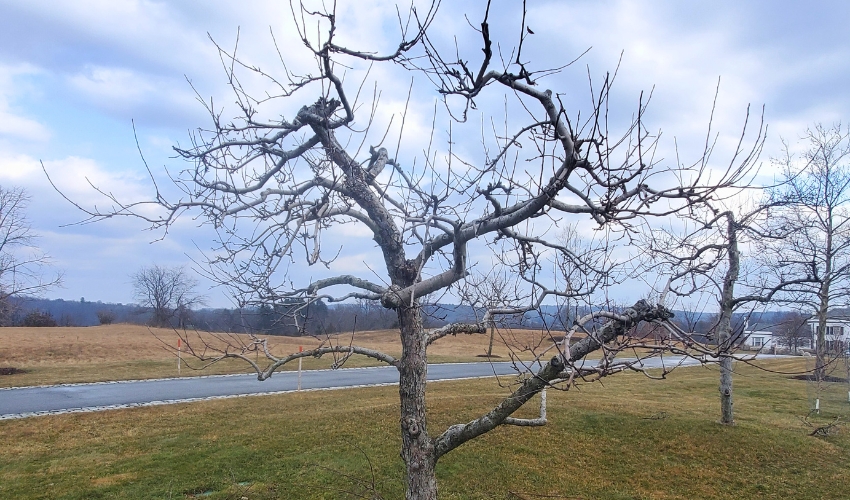
Proper dormant-season pruning creates a strong branch structure and promotes healthy fruit production.
Best Pruning Times for Common Hudson Valley Fruit Trees
Different fruit trees have different dormancy needs, cold tolerances, and disease risks – which means their ideal pruning windows aren’t the same. Here’s what works best for the most common Hudson Valley fruit trees.
Apple Trees: Most Winter Timing Flexibility
Apples dominate Hudson Valley fruit production, with Ulster County ranking among New York State’s major apple-producing regions. According to Penn State Extension, apples should be pruned during dormancy before bud break.
Here is the recommended timing based on the variety:
- Hardy Varieties (McIntosh, Empire, Northern Spy): Can be pruned from early winter through late winter. Their cold tolerance developed for northeastern conditions provides flexible scheduling options.
- Modern Varieties (Honeycrisp, Gala): Best pruned during mid-winter to late winter periods when the tree is completely dormant.
- Heritage Varieties: Late winter only for maximum safety. These irreplaceable trees in Cornwall-on-Hudson’s historic district represent genetic diversity that can’t be replaced if damaged by poor timing.
- Dwarf Trees: Late winter preferred due to potentially reduced cold tolerance compared to standard rootstocks.
The visual cues for optimal apple tree timing include:
- Light buds with no swelling
- Firm bark
- Trees that look completely dormant
PRO TIP: Learning proper fruit tree pruning techniques remains essential regardless of the variety chosen.
Stone Fruits: Prune in Late Winter Only
Stone fruits require more careful timing due to their disease susceptibility and marginal hardiness in the Hudson Valley’s zone 5b-6a conditions. Penn State Extension recommends late dormancy timing to minimize disease issues.
The timing for different stone fruits includes:
- Peaches: Late winter only, after extreme cold danger passes. These trees face the highest susceptibility to bacterial canker and other diseases entering through pruning wounds.
- European Plums: Mid- to late winter timing works well. These varieties handle cold better than Japanese types.
- Japanese Plums: We recommend late winter for disease prevention and cold protection.
- Sweet Cherries: Late winter only due to limited hardiness in protected Hudson Valley locations.
- Sour Cherries: Mid- to late winter acceptable, but late winter provides maximum safety.
Stone fruits benefit from the shortest possible window when both cold damage and disease pressure are minimized. Following pruning with dormant oil spray applications helps protect these vulnerable trees.
Pears and Specialty Fruits: Moderate Flexibility
Pears adapt well to Hudson Valley conditions and accept timing throughout the dormant season. Research shows pears respond similarly to apples for dormancy requirements.
For most American pears (such as Bartlett or Bosc), we recommend pruning anytime in the winter. Asian pears, on the other hand, respond best to mid-winter or late winter pruning.
Specialty fruits require more conservative approaches, including:
- Quince: Late winter only due to marginal hardiness
- Persimmons: Late winter only for zone 5b-6a survival
- Fig trees (in protected locations): Late winter timing essential
How Hudson Valley Weather Affects Your Fruit Tree Pruning Timing
Weather plays a bigger role in pruning fruit trees than most homeowners realize – and in the Hudson Valley, the swings between warm spells and cold snaps make timing less about the month and more about what the weather is doing right now.
Why Recent Winters Are Changing Pruning Decisions
The past few winters have shown a clear pattern: milder average temperatures punctuated by sharp cold snaps. Last winter’s warmer-than-normal conditions significantly impacted fruit tree dormancy cycles, validating meteorologist predictions about changing regional patterns.
These temperature swings interrupt natural dormancy cycles and affect how quickly pruning cuts heal and whether trees remain truly dormant. Hudson Valley Weather data confirms that frost dates continue shifting later, while cold snaps become less predictable but still severe.
Here’s how shifting weather patterns influence pruning timing:
- Warmer early winter temperatures that may break dormancy prematurely
- Unpredictable mid-winter cold snaps that stress recent pruning cuts
- Later spring frost dates extending safe pruning windows
- More frequent temperature swings during traditional dormant seasons
How Your Location in the Hudson Valley Affects Pruning Timing
The Hudson Valley’s diverse topography creates distinct microclimates that affect when your trees enter and exit dormancy. River valley locations, like Cornwall-on-Hudson and Newburgh, benefit from the Hudson River’s moderating effect, maintaining milder temperatures than surrounding areas.
Properties in Gardiner, near the Shawangunk Ridge, experience more extreme temperature fluctuations and extended dormancy periods. Higher elevation and northwestern wind exposure create conditions where trees stay dormant longer.
Key microclimate considerations:
- River Valley Areas (Cornwall-on-Hudson, Newburgh): Milder temperatures allow earlier optimal timing
- Highland Areas (Gardiner): Colder conditions require more conservative late winter timing
- Western Exposure (Saugerties): Variable temperatures demand close monitoring for early bud break
- Urban Areas (Newburgh): Heat island effects can advance growing season timing
Why Dormancy Timing Matters More Than the Date on the Calendar
The health of your fruit trees depends far more on what the tree is doing than on what month the calendar says it is. In the Hudson Valley – where winter can swing from mild to freezing in a week – pruning based on true dormancy gives your trees the best chance to heal quickly and produce healthy growth in spring.
“In our 15+ years serving Hudson Valley orchards, we’ve learned that timing isn’t just about the calendar. We monitor weather patterns, assess individual tree conditions, and adjust our pruning schedule based on real-time conditions rather than rigid dates. This approach has helped us maintain healthy orchards even during unpredictable winters.” – Todd Hill, Owner and ISA Certified Arborist at Hill Treekeepers
How Dormancy Helps Trees Heal After Pruning
Fruit trees enter dormancy as daylight decreases and temperatures drop, moving energy from leaves into root systems for winter storage. During true dormancy, trees have minimal metabolic activity and maximum energy reserves available for healing pruning wounds quickly and completely.
Dormancy isn’t an instant process but occurs gradually through late fall and early winter. The progression in Hudson Valley fruit trees follows this pattern:
- Late Fall: Energy moves from leaves to roots, initial dormancy begins
- Early Winter: Light dormancy achieved, still vulnerable to warm weather stimulation
- Mid-Winter: Full dormancy with optimal pruning conditions
- Late Winter: Continued dormancy but preparation for spring growth begins
Pruning during deep dormancy allows trees to compartmentalize wounds faster, resist pests and disease, and avoid stress caused by temperature swings.
What Optimal vs. Acceptable Pruning Timing Means (and Why It Matters)
While fruit trees can be pruned throughout the dormant season, certain periods offer greater advantages. Optimal timing occurs during deep dormancy when trees have maximum healing capacity and no risk of growth stimulation.
Acceptable timing includes early winter and late winter periods when dormancy is lighter but still present. Early winter pruning may stimulate localized growth around cuts during warm spells, while late winter pruning may reduce energy reserves right when spring growth demands maximum resources.
Understanding these differences helps you choose timing that matches your goals and risk tolerance. Heritage trees and valuable specimens benefit from optimal timing, while hardy varieties in good health accept more flexible scheduling.
PRO TIP: Visual dormancy indicators trump calendar dates every time. Look for tight, unopened buds with no swelling, firm bark, and trees that appear completely “asleep” rather than consulting fixed schedules.
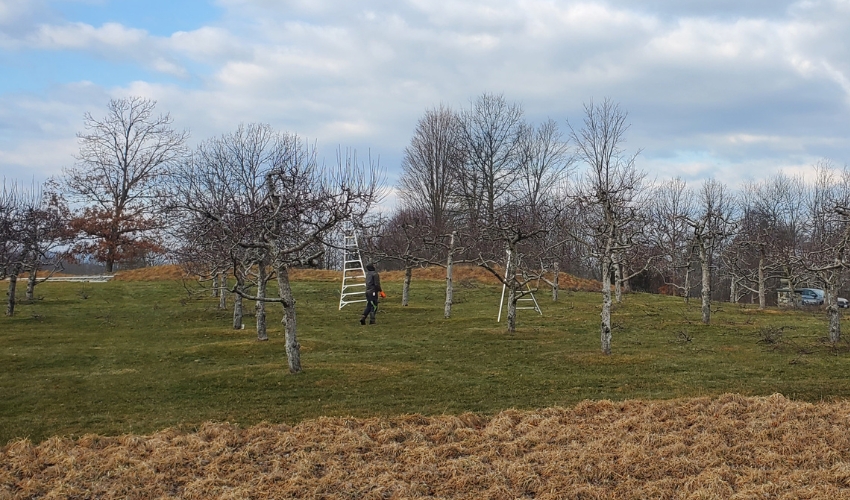
Commercial orchard pruning requires professional equipment and expertise for optimal timing and technique.
Frequently Asked Questions About Fruit Tree Pruning
What happens if I prune my fruit trees too early in winter?
Early winter pruning can stimulate localized growth around cuts during warm periods. When severe cold returns, this new growth may be damaged or killed, creating entry points for disease and reducing tree vigor. The risk is highest for stone fruits and lowest for hardy apple varieties.
Can I still prune if I missed the optimal winter window?
Light pruning of dead, damaged, or crossing branches can be done anytime for safety reasons. However, major structural pruning should wait until the following dormant season, as growing season pruning removes energy-producing leaves and can reduce fruit quality.
How do I know if my trees are still dormant enough for pruning?
Look for tight, unopened buds with no signs of swelling or color change. Once buds begin to swell or show green, dormancy is breaking and major pruning should be avoided. In the Hudson Valley, this typically occurs in late winter to early spring, depending on current weather conditions.
Should elevation affect my pruning timing in Montgomery or Gardiner?
Higher elevation properties experience extended dormancy periods, requiring more conservative timing. Properties at higher elevations should focus on late winter timing, while lower elevation locations near the river may successfully prune earlier in the optimal window.
What weather conditions should delay pruning even during dormancy?
Avoid pruning when extreme cold is forecast within 48 hours, during ice storms, or when extended rain periods are predicted. Wet conditions increase disease transmission risk, while sudden temperature drops can stress fresh cuts before they begin healing.
Do heritage apple trees in Cornwall-on-Hudson require different timing?
Heritage trees represent irreplaceable genetics and should receive conservative late winter timing only. These mature trees have survived decades or centuries, and preserving them requires minimizing any risk of stress from suboptimal timing.
For Expert Fruit Tree Care in the Hudson Valley, Call Hill Treekeepers
Choosing optimal timing makes the difference between healthy, productive fruit trees and stressed trees susceptible to disease and poor fruit production. Understanding dormancy cues, local weather patterns, and species-specific needs requires expertise developed through years of regional experience.
Hill Treekeepers has provided specialized orchard care throughout Dutchess, Orange, and Ulster Counties since 2007. Our ISA Certified Arborists understand the unique challenges of Hudson Valley fruit growing, from heritage varieties in Cornwall-on-Hudson to modern orchards in Montgomery. We monitor weather patterns, assess individual tree conditions, and time our pruning services for optimal tree health and fruit production.
Don’t risk your valuable fruit trees with poor timing decisions. Call us today at 914-214-7045 or request a quote online for expert fruit tree pruning timed perfectly for Hudson Valley conditions.
Share this online!

Get the highest quality of tree services for residential and commercial properties in the Hudson Valley area. We look forward to working with you!
TOPICS
Recent Articles



Don't Miss the Next Update!
Join the thousands of smart Hudson Valley residents who get the monthly newsletter from Hill Treekeepers. It's full of helpful information you won't want to miss!