
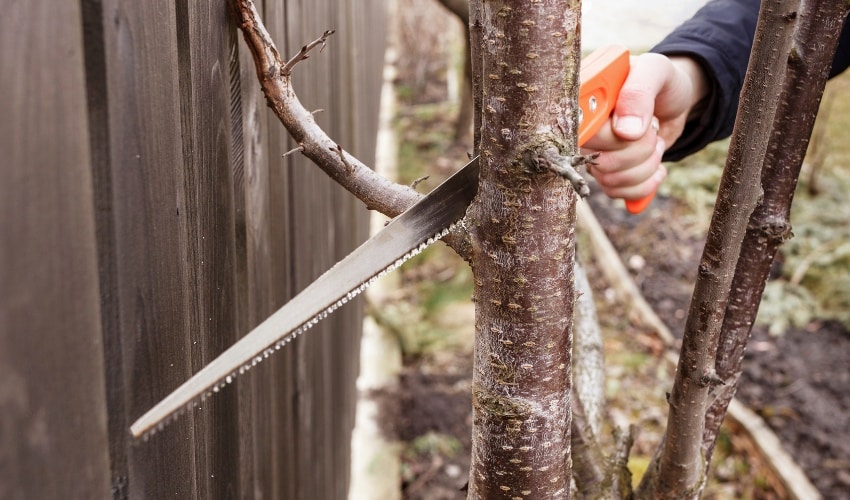
As winter starts to fade and color returns to the Hudson Valley, many homeowners begin cleaning up their yards and taking a closer look at their trees. That’s usually when long, overextended branches, minor damage, and areas that could us shaping become more noticeable.
But did you know that pruning at the wrong time of the year can create more problems than you’re trying to solve? Cuts made at the wrong time can leave trees vulnerable to disease,
cause unnecessary stress, or reduce flowering. Knowing what’s safe to prune now — and what should wait until the next dormant season — helps you clean up your landscape without creating new problems.
Key Takeaways
- Late winter is the best time to prune most deciduous trees and shrubs in the Hudson Valley because trees heal faster, disease pressure is low, and the bare canopy makes structural problems easy to spot.
- Oaks and elms should only be pruned during dormancy to avoid attracting the beetles that spread oak wilt and Dutch elm disease, while maples and birches can be pruned outside of late winter to minimize heavy sap bleeding from cuts.
- Spring-blooming shrubs, like lilacs, dogwoods, and forsythia, flower on last year’s growth, so they should be pruned right after they finish blooming.
- Dead, damaged, or diseased branches are the exception to every timing rule and should be removed as soon as you notice them, regardless of the season.
- Avoid major pruning in late summer and fall because it triggers tender new growth that won’t harden off before the Hudson Valley’s first hard freeze, weakening the tree heading into winter.
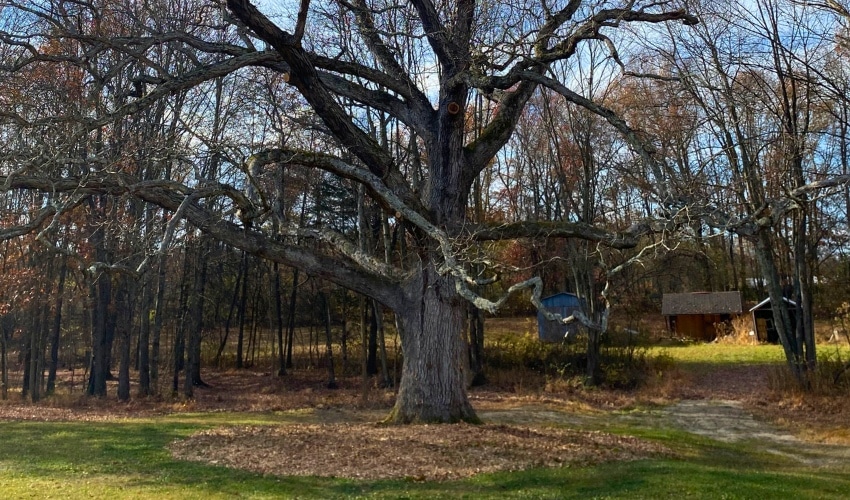
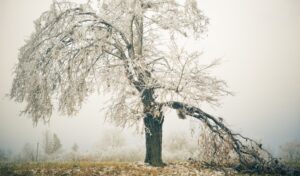
Late winter is one of the best times to assess a tree’s structure; without leaves in the way, weak unions, deadwood, and crossing branches are much easier to spot.
When Is the Best Time to Prune Trees in the Hudson Valley?
Late winter through very early spring is the best time to prune most trees in the Hudson Valley. For the majority of shade and ornamental trees, this dormant period — typically January through early April — provides the best results with the lowest risk of stress or disease.
The exact timing can vary depending on your location. Properties along the Hudson River tend to warm up earlier, while higher-elevation areas near the Shawangunk Ridge stay dormant longer. If you’re unsure whether your trees are still dormant, check the buds — they should be tight and unopened. Once you start to see green, the pruning window is closing.
Pruning in spring and summer isn’t wrong, but it serves a different purpose. It’s best suited for removing deadwood or addressing issues that become visible after leaf-out. For major structural pruning, the dormant season remains the ideal time.
Why Pruning During Dormancy Is Better
Some of the benefits of dormant tree pruning include:
- Faster Healing: Trees heal faster in the winter and will fully callus before the summer arrives, making them less susceptible to diseases and decay.
- Lower Risk of Disease and Pests: Diseases and pests are dormant in the winter, along with trees, so you won’t have to worry about an infection. With current threats like Dutch elm disease and emerging ones like oak wilt that can kill trees, prevention is more important than ever.
- Easier to Spot Branch Structure: Without leaves in the way, arborists can more easily spot crossing branches, weak unions, deadwood, and other structural problems that pruning can correct.
- Better Fruit from Trees: Strategic pruning of fruit trees in the winter can lead to higher-quality fruit when it comes time to harvest.
Can You Prune Trees in Spring?
Yes, with some limits. Spring is a good time for light, corrective pruning once trees leaf out and issues become easier to see. What is safe to prune in spring includes:
- Removing dead, damaged, or broken branches
- Trimming minor overgrowth or crowded areas to improve airflow, visibility, or clearance around your property
- Addressing low risk structural issues
Can You Prune Trees in Summer?
Yes, for specific purposes. Summer is a good time for targeted maintenance and pruning that benefits from full leaf visibility. What is safe to prune in summer includes:
- Removing dead, damaged, or diseased branches
- Trimming back overgrowth for clearance around structures, walkways, or views
- Light corrective pruning once the canopy is fully visible
- Pruning spring-flowering trees and shrubs after they finish blooming
- Pruning maples and birches in late spring through early summer to avoid excessive sap bleeding
- Light pruning of fruit trees to help direct energy toward fruit production rather than excess leafy growth
Summer pruning is best for refining growth and making adjustments, rather than major structural changes.
Can You Prune Trees in Fall?
You can prune in fall, but only in some cases. Keep fall pruning light and limited to dead or dangerous branches, rather than doing major structural work. As trees prepare for dormancy, cuts can stimulate new growth and interfere with energy storage, leaving trees more vulnerable heading into winter.
Fall is often when damage from summer storms becomes more visible, especially as leaves drop and the canopy opens up. This is also when underlying structural issues often become easier to spot, making it a good time to plan corrective pruning during dormancy. However, pruning should be limited to situations where it’s necessary for safety or tree health.
What is appropriate to prune in fall includes:
- Removing broken or hanging branches caused by summer storms
- Addressing limbs that pose an immediate safety risk
- Cutting out clearly diseased or decaying wood to prevent further spread
For everything else, it’s best to wait until the dormant season when trees can respond more effectively to pruning.
PRO TIP: Always consider species, tree health, and current conditions before pruning — when in doubt, consult an arborist.
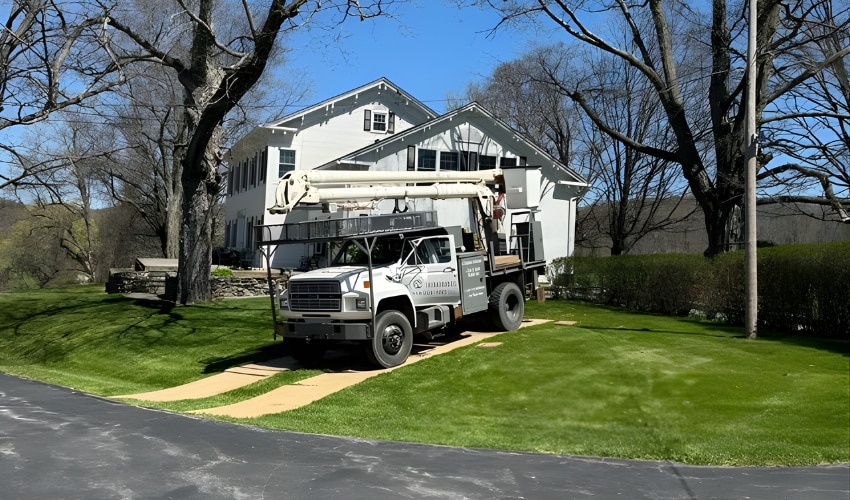
Hill Treekeepers uses a bucket truck to safely reach and prune larger trees on residential properties throughout the Hudson Valley.
Frequently Asked Questions About When to Trim Trees
How much of a tree can you prune at once?
A general rule of thumb is to remove no more than 25% of a tree’s live canopy in a single season. Removing too much stresses the tree, triggers excessive water sprout growth, and can leave it vulnerable to sunscald and disease. Less is often more when it comes to tree pruning.
Does pruning hurt a tree?
Proper pruning doesn’t hurt a tree; it benefits it by removing dead or competing branches and improving its structure. Trees naturally seal wounds by forming callus tissue over the cut. However, improper pruning (topping, flush cuts, removing too much at once, or pruning at the wrong time) can cause lasting damage.
How often should trees be pruned?
Young trees benefit from structural pruning every 2–3 years to develop a strong branch framework. Mature trees in good health may only need pruning every 3–5 years, though annual inspections help catch deadwood or storm damage early. Fruit trees and ornamental shrubs typically need attention every 1–2 years.
Do I need to seal pruning cuts?
No, trees naturally form callus tissue to seal wounds, and wound sealants can actually slow the healing process. Clean, properly placed cuts just outside the branch collar are all that’s needed.
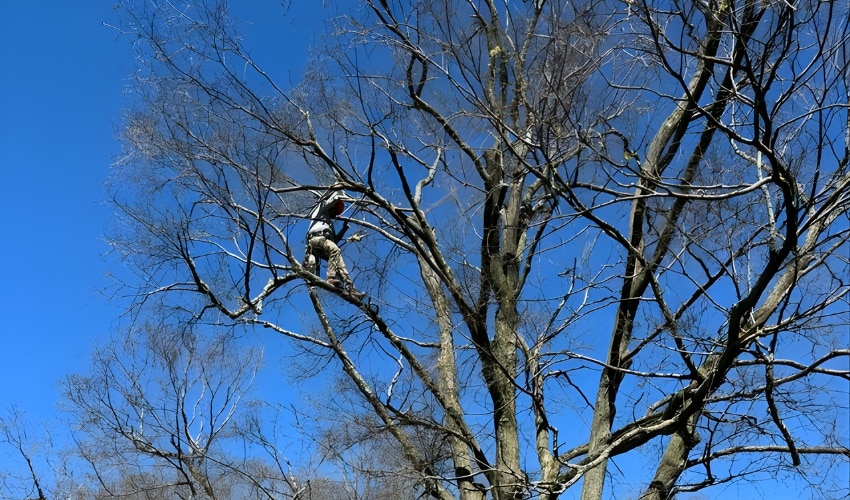
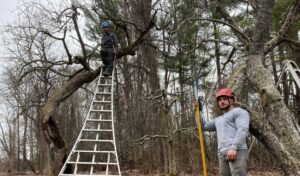
Climbing arborists can access the upper canopy to make precise pruning cuts that improve a tree’s structure and long-term health.
Not Sure When to Prune? Let’s Talk!
If your trees need attention, knowing when to prune is just as important as knowing what to cut. The right timing helps trees recover quickly and stay healthy, while the wrong timing can lead to stress, disease, or missed blooms.
If you have trees that you think could benefit from pruning but aren’t sure when to prune them, don’t just guess. The ISA Certified Arborists at Hill Treekeepers will work with you to find the right time to prune each of your trees. Call us today at 914-306-9069 or request a quote online.
Share this online!

Get the highest quality of tree services for residential and commercial properties in the Hudson Valley area. We look forward to working with you!
TOPICS
Recent Articles


Don't Miss the Next Update!
Join the thousands of smart Hudson Valley residents who get the monthly newsletter from Hill Treekeepers. It's full of helpful information you won't want to miss!

