

When growth slows and leaves drop, trees enter a dormant phase that creates ideal conditions for pruning, inspection, and protection work that’s difficult or risky to do during the growing season. Yet, many homeowners assume tree care can wait until spring, missing opportunities to support long-term health.
In the Hudson Valley, winter tree care focuses on preparing trees for the year ahead. From dormant pruning and structural assessments to protecting roots and young trees from cold stress, the work done in winter plays a major role in how trees grow, recover, and withstand seasonal challenges.
Key Takeaways
- Winter pruning during the dormant season promotes healthier spring growth while reducing disease transmission risks common during active growing periods.
- Proper tree protection, including mulching, wrapping, and watering, prevents frost damage and maintains tree health through variable Hudson Valley winter conditions.
- Regular winter inspections identify storm damage and structural problems before they become safety hazards or require emergency intervention.
- Young tree care, including staking, wrapping, and protection, prevents winter damage that can set back growth for multiple seasons.
- Strategic winter watering during dry periods maintains tree health when natural precipitation becomes insufficient for root zone needs.
- Professional maintenance of protection systems ensures continued effectiveness throughout demanding winter weather.
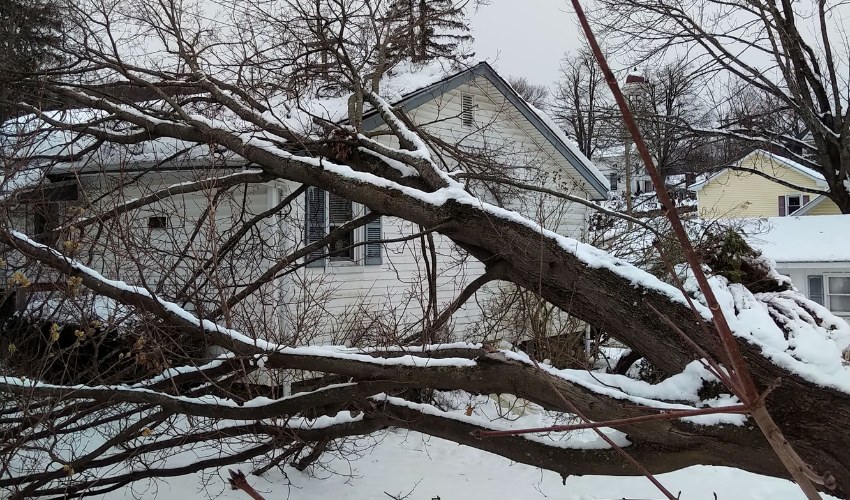
Winter storms can cause sudden tree failures that can block driveways or damage homes. Proactive winter assessment helps identify vulnerable branches before they fall.
What Recent Winter Weather Continues to Reveal About Tree Care
Severe winter weather doesn’t have to arrive as a single, historic storm to cause problems. Over the past several winters, the Hudson Valley has seen a steady mix of ice, heavy snow, saturated soils, and strong winds – conditions that consistently expose weaknesses in trees that weren’t addressed ahead of time.
The February 2022 ice storm is one clear example. When the storm passed, tens of thousands of Ulster County residents were without power, and Kingston saw widespread outages. Central Hudson reports that storm-related tree damage accounts for roughly 40% of power outages across their service area.
What’s become increasingly clear over recent winters is that the same issues show up year after year, even during less severe weather. Trees with dense, unpruned canopies, weak branch attachments, or existing structural defects are far more likely to fail under added winter stress. Trees that receive regular dormant-season pruning and inspections tend to perform far better, often requiring little more than routine cleanup.
In other words, winter storms don’t usually create problems – they reveal the ones that were already there.
“The February 2022 ice storm taught many Hudson Valley property owners that reactive tree care costs far more than preventive maintenance. Properties with proper fall preparation needed minimal cleanup, while neglected landscapes required weeks of expensive emergency work.” – Todd Hill, ISA Certified Arborist and Hill Treekeepers Owner
6 Essential Winter Tree Care Tasks for Hudson Valley Properties
With a little preparation, you can have your tree ready to withstand the worst of winter. Here are six tips for proper winter tree care in the Hudson Valley.
1. Schedule Professional Dormant Season Pruning
Winter represents the optimal time for most tree pruning because dormant trees direct energy toward wound healing rather than competing with active growth. Professional pruning during November through February provides significant benefits for Hudson Valley trees that cannot be achieved during other seasons.
For instance, dormant season pruning allows precise structural evaluation without foliage obstruction. This enables ISA Certified Arborists to make informed decisions about branch removal for optimal tree health and safety. Disease prevention becomes particularly critical because many pathogens remain dormant during cold months, making winter the only safe time to prune disease-susceptible species like elm.
Professional winter pruning also provides economic advantages because frozen ground supports heavy equipment without landscape damage, and crews work more efficiently when trees are leafless.
PRO TIP: Fruit trees receive particular benefit from late winter pruning because proper timing enhances production while reducing infection risks.
2. Protect Young Trees from Winter Damage
Young trees require comprehensive winter protection because their developing systems cannot withstand temperature fluctuations and exposure that mature trees tolerate throughout the Hudson Valley’s challenging conditions. Some services that help protect young trees include:
- Trunk Wrapping: Helps prevent sunscald, which occurs when bark warms during sunny winter days and rapidly refreezes at night. This repeated expansion and contraction can cause bark splitting and frost cracks that later invite insects and disease.
- Proper Staking: Provides wind support while still allowing controlled movement, which is important for strong trunk development. Professional staking uses flexible materials that avoid bark damage and don’t restrict natural growth.
- Burlap Screens: Protect young trees from drying winter winds, road salt spray, and increased deer browsing when natural food sources are limited.
- Anti-Desiccant Sprays for Evergreens: Young evergreens continue to lose moisture through their needles during winter, even when frozen soil limits water uptake. Anti-desiccants help reduce moisture loss and prevent winter burn.
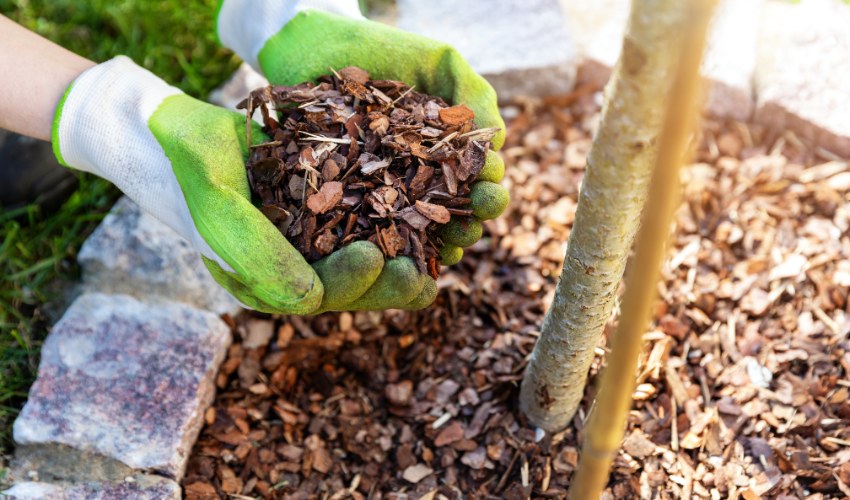
Proper mulching around trees provides essential winter protection for roots and helps retain soil moisture during freezing temperatures.
3. Apply Proper Mulching for Root Protection
Winter mulching provides essential root zone protection throughout variable Hudson Valley temperatures, creating stable soil environments that support tree health and prevent frost damage during extreme weather events.
Organic mulch materials create effective insulation that moderates soil temperature fluctuations while retaining moisture and preventing frost heaving that can damage surface roots. Understanding the complete benefits of organic mulch helps property owners make informed decisions about material selection and application techniques.
Professional mulch application requires understanding proper depth and distribution patterns. Optimal depth ranges from 2 to 4 inches, extending from the trunk base to the tree’s drip line while maintaining clear space around the trunk to prevent moisture retention and decay.
4. Monitor Trees for Storm Damage and Safety Issues
Regular winter monitoring identifies developing problems before they become safety hazards or costly emergencies. Property owners must understand what conditions indicate immediate professional attention and which situations can wait for spring assessment.
Storm damage assessment becomes critical after each significant weather event because hanging branches, split trunks, and compromised root systems can deteriorate rapidly as conditions change. Learning to recognize how stormy weather affects your trees helps property owners respond appropriately to different types of damage.
Visual inspection focuses on identifying obvious safety hazards, including:
- Branches touching power lines
- Limbs blocking access routes
- Hanging branches over structures
- Trees showing unusual leaning after storms
- Cracked bark extending around the trunk circumference
- Exposed root systems
- Bark separation from the trunk
A comprehensive pre-winter tree risk assessment can identify many of these problems before severe weather arrives.
5. Provide Supplemental Watering During Dry Periods
Winter watering becomes essential during extended dry periods because trees continue requiring adequate soil moisture even during dormancy, and frozen ground often prevents natural precipitation from reaching root systems.
Proper winter watering timing focuses on periods when temperatures remain consistently above freezing for several consecutive days, allowing applied water to penetrate soil rather than creating surface ice formations. Watering technique emphasizes slow, deep applications that penetrate the root zone effectively.
Different trees need different amounts of water in the winter:
- Young Trees: Young trees and recently transplanted specimens require particular attention because their limited root systems cannot access deep soil moisture reserves that sustain mature trees during drought conditions. Professional assessment determines appropriate schedules based on tree age, species requirements, and local precipitation patterns.
- Evergreens: Evergreen trees face unique challenges because they maintain active foliage throughout dormancy and continue losing moisture through transpiration while dealing with reduced water availability from frozen soil. Species including hemlock, pine, and spruce benefit from supplemental watering during dry periods.
- Newly Planted Trees: Container and newly planted trees require more frequent winter watering because their restricted root zones cannot withstand moisture fluctuations effectively, typically needing water applications every 2-3 weeks during dry periods.
6. Maintain Tree Protection Systems Through Winter
Existing tree protection systems (cabling and bracing) require systematic winter inspection. Weather-related stress and temperature fluctuations can affect their structural integrity and effectiveness.
Cabling and bracing systems need professional inspection to ensure all hardware components remain properly tightened throughout winter temperature cycles. Understanding the benefits of professional tree cabling and bracing helps property owners recognize when these systems require maintenance or adjustment.
Tree guards and trunk protection materials require monitoring for physical damage, displacement, or deterioration that can reduce effectiveness. Staking systems need periodic assessment because soil settlement or frost heaving can loosen connections or create restriction points that damage developing trees.
Frequently Asked Questions About Winter Tree Care
When is the best time to prune trees in the Hudson Valley?
November through February represents optimal pruning time for most species because dormant trees heal more effectively, and disease transmission risks remain minimal. Spring-flowering trees should be pruned immediately after blooming to preserve next year’s flowers.
How can I protect my trees from deer damage in winter?
Burlap wrapping, tree guards, and repellent applications provide effective protection when natural food becomes scarce. Professional application ensures materials remain secure while allowing adequate air circulation around protected trees.
Should I be concerned about ice accumulation on my trees?
Heavy ice accumulation can exceed branch strength, but attempting removal typically causes more harm than natural melting. Contact ISA Certified Arborists if loading appears excessive or if you observe cracking sounds or unusual movement.
How can I care for my trees during winter if this is my second home and I’m not there regularly?
Seasonal property owners should schedule professional pre-winter inspections in late fall to identify potential problems before they develop into emergencies. Install proper mulching and tree protection systems before winter arrives, as these provide ongoing protection without requiring your presence.
Professional monitoring services can provide regular check-ins after major storms and address urgent safety issues immediately. Work with ISA Certified Arborists who offer emergency response services for severe weather events. Consider establishing relationships with local neighbors who can alert you to obvious problems like large fallen branches.
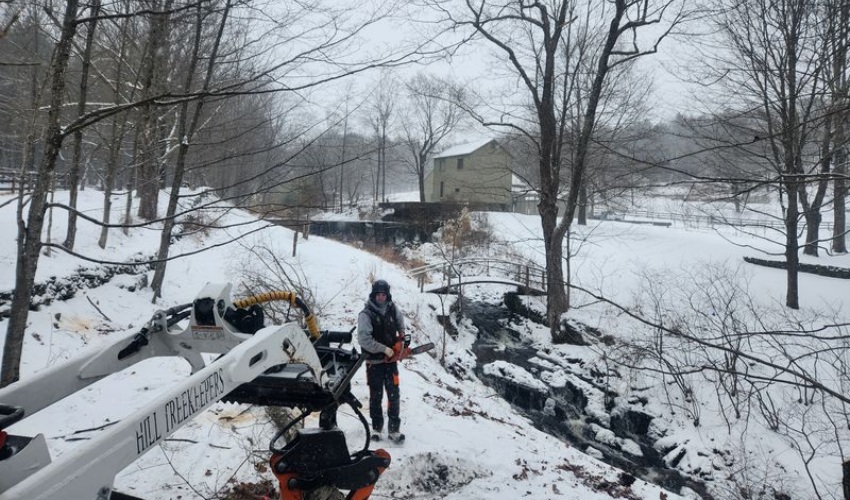
Ensure Your Trees Thrive This Winter with Help from Hill Treekeepers
Comprehensive winter tree care protects your landscape investment while ensuring safety throughout challenging months ahead. These six essential tasks address the specific needs of trees facing Hudson Valley’s demanding winter conditions, helping property owners develop appropriate care strategies for long-term health and safety while avoiding costly emergencies.
Hill Treekeepers’ ISA Certified Arborists provide expert winter tree care throughout Newburgh, Goshen, Saugerties, and beyond. Our comprehensive approach includes pruning, professional protection systems, and seasonal monitoring. Call Hill Treekeepers today at 914-214-7045 or request a quote online to ensure your trees receive the professional attention they deserve this winter season.
Share this online!

Get the highest quality of tree services for residential and commercial properties in the Hudson Valley area. We look forward to working with you!
TOPICS
Recent Articles

Don't Miss the Next Update!
Join the thousands of smart Hudson Valley residents who get the monthly newsletter from Hill Treekeepers. It's full of helpful information you won't want to miss!